The brief: batteries for new cargo e-rickshaws
The dealer needed lithium battery packs for new cargo e-rickshaws. These are e-carts, and the dealer's vehicles are used for parcel delivery. The customer is an EV dealer and distributor in Ahmedabad, Gujarat, and we have kept its name out of this write-up.
The vehicles were new, so there was no old battery to replace. That also means there is no earlier range figure to compare against, and this case study does not give one.
The dealer came to us through our sales team. Before choosing, it compared packs from other Indian battery makers. Our standard packs are listed on the e-rickshaw lithium batteries page; this project needed a pack built to the vehicle's own battery space. To compare market prices, see our e-rickshaw lithium battery price list. For passenger L5 e-autos, the standard pack is the Gati Auto 210.
Why the dealer chose our LFP pack
The dealer gave us four reasons for choosing our pack over the others it compared:
- Price. We can't publish cost figures, but price was one of the deciding points.
- Custom design. We built the pack to the dimensions of the vehicle's battery space.
- Local service. We build our packs in Rajkot, in the same state as the dealer.
- Its own checks. The pack did better than the alternatives in checks the dealer ran itself. We don't have the test numbers, so we can't say more than that.
The pack uses LFP (lithium iron phosphate) chemistry. We make both LFP and NMC battery packs, and you can read how we build LFP and NMC packs.
The pack we built
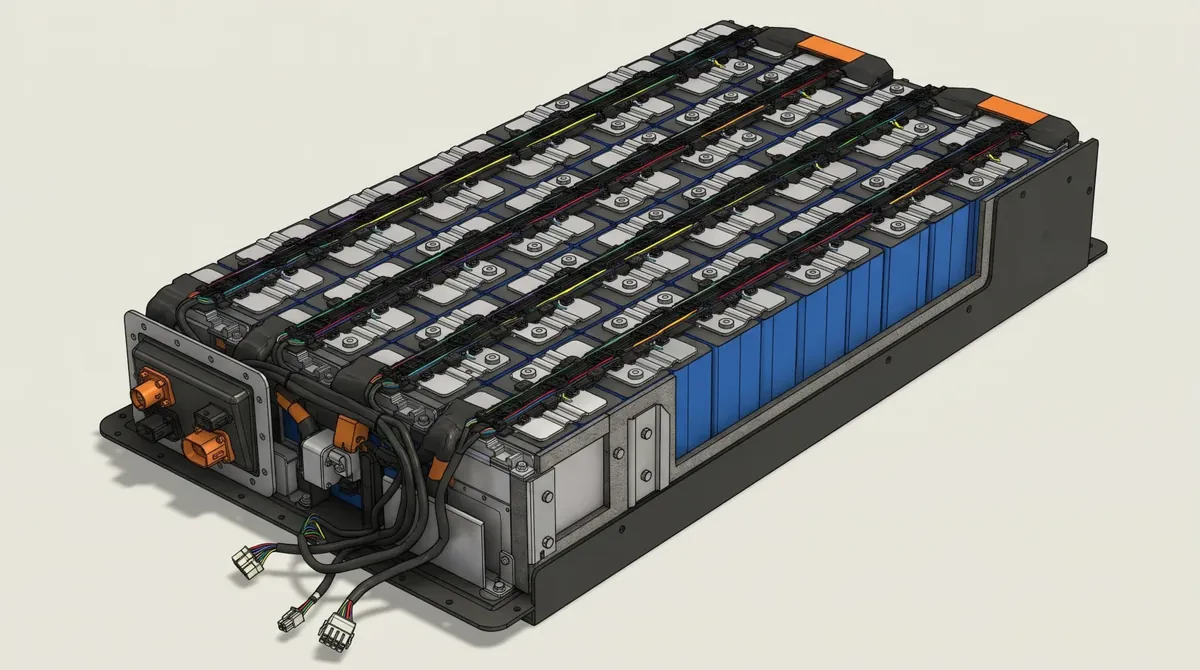
The pack is a custom-size version of the Gati Cargo 132. It keeps the 60.8V, 132Ah rating and uses prismatic LFP cells. The catalogue lists a charge of 1.5 hours at 100 A; on the vehicle maker's charger a full charge takes about 2 hours.
| Item | Specification |
|---|---|
| Base model | Gati Cargo 132, custom size |
| Chemistry | LFP (lithium iron phosphate) |
| Cell format | Prismatic LFP cells |
| Nominal voltage | 60.8V |
| Capacity | 132Ah |
| Energy | About 8 kWh (60.8V × 132Ah ≈ 8.03 kWh) |
| Dimensions | Built to the vehicle's battery space |
| Charger | The vehicle maker's charger |
| Full charge time | About 2 hours |
| Warranty | 3 years |
The battery management system (BMS) on these packs provides:
- A Bluetooth app connection
- IoT and GPS telematics
- Active cell balancing, which keeps the cells at a similar state of charge
- Remote immobilisation
- Temperature protection
Pilot first, then the fleet
We ran a pilot on 5 vehicles before supplying the fleet. The pilot put a small number of packs into real delivery work before the dealer committed to a larger order.
| When | What happened |
|---|---|
| May 2025 | Project started |
| 2 to 4 weeks from order | First packs delivered |
| June 2025 | First packs on the road; pilot on 5 vehicles |
| After the pilot | Supply moved to the wider fleet |
| As of 31 October 2026 | More than 100 packs supplied; repeat order placed |
What the dealer reports
Our warranty records show no pack failures and no warranty claims. The packs went into service at different dates as the fleet grew, so the oldest packs have been on the road since June 2025 and the newest for less time.
In the first three months, the dealer told us its vehicles were making more trips per day, carrying more payload and spending less time off the road. The dealer did not measure these changes. The vehicles were also new, so there is no earlier battery in the same vehicles to compare with. We report this as the dealer's feedback and give no numbers for it.
The repeat order is the plainest sign of how the pilot and fleet went from the dealer's side.
What dealers and fleet operators can take from this
These are our recommendations, based on this one project.
- Run a pilot before a fleet order. Five vehicles were enough to put packs into real delivery work before the larger order. A small pilot limits what you have at stake if a pack does not suit your routes or loads.
- Ask for a pack sized to your battery space. This pack kept the Gati Cargo 132's voltage and capacity but was built to the vehicle's dimensions. If a standard pack does not fit your vehicle, ask the maker whether it can build to your measurements.
- Run your own checks on shortlisted packs. The dealer compared other Indian makers and tested the packs itself, and those checks helped decide the order. Write your results down so you can compare suppliers on the same terms, and test under your own conditions: a Sandia National Laboratories study (Preger et al., 2020) found that depth of discharge, temperature and charge rate change how long lithium cells last, even within one chemistry.
- Record trips, payload and downtime from day one. The dealer saw gains but had no figures for them. If you log these numbers from the first week, you will have evidence when you review the packs or place the next order.
Frequently asked questions
Why did this dealer choose this pack?
The choice came down to price, a pack that fit the vehicle, local service and better results in the dealer's own checks. No pack has failed or been claimed under warranty since June 2025. That is one fleet's record, not a lab test.
Can the pack be built for a different vehicle?
We built this pack to the dimensions of the dealer's battery space, starting from the Gati Cargo 132. If you have a different vehicle, you can ask us for a quote on a pack sized to it through our custom battery packs for OEMs page.
What warranty do these packs carry?
The packs in this project carry a 3-year warranty. Our support page is where you register the battery, and it links to the warranty policy.
How we gathered these facts
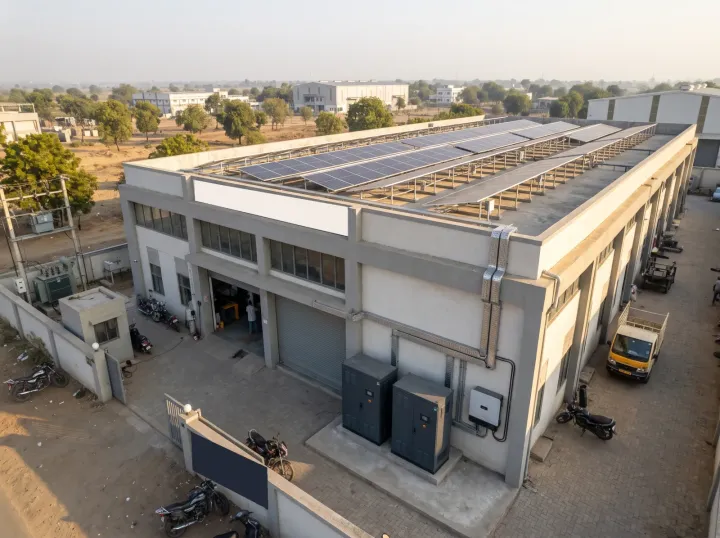
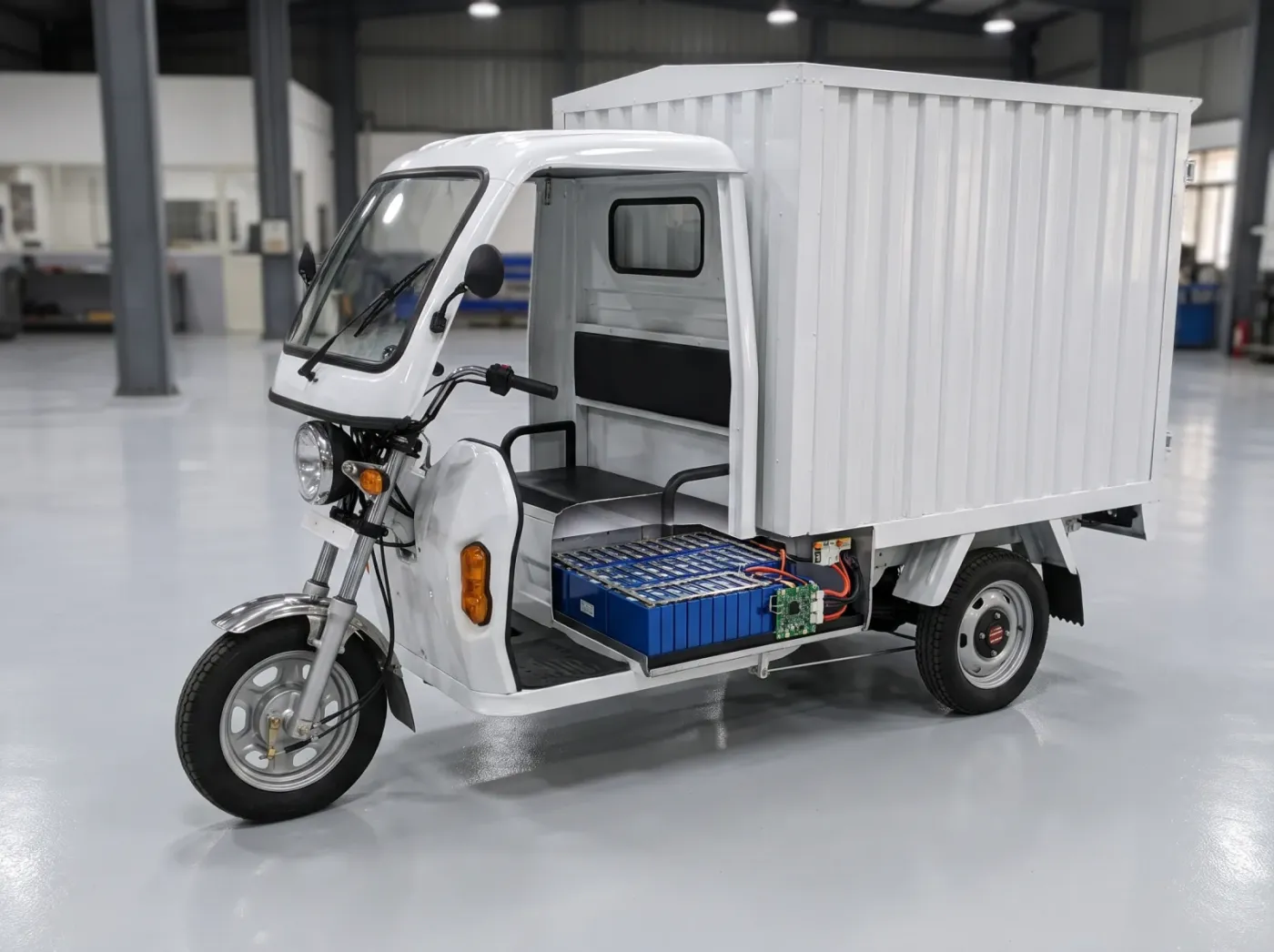
This case study draws on our project and warranty records and on feedback from the dealer. We have left out any figure that was not measured, including range, trips per day, payload and downtime. We have also left out the customer's name, cost figures and vehicle photos. The cover image is an illustration, not a photo of the dealer's vehicles.
If you build or run cargo e-rickshaws and need a pack sized to your vehicle, tell us about it through the OEM quote form. Back to all case studies.
About the author
Aum Parsana is the founder of Halovolt and leads its technology and product work. Halovolt designs and builds LFP and NMC lithium battery packs in Rajkot, Gujarat. More about the company, our terms and policies and how to reach support.