The problem with lead-acid on three-shift forklifts
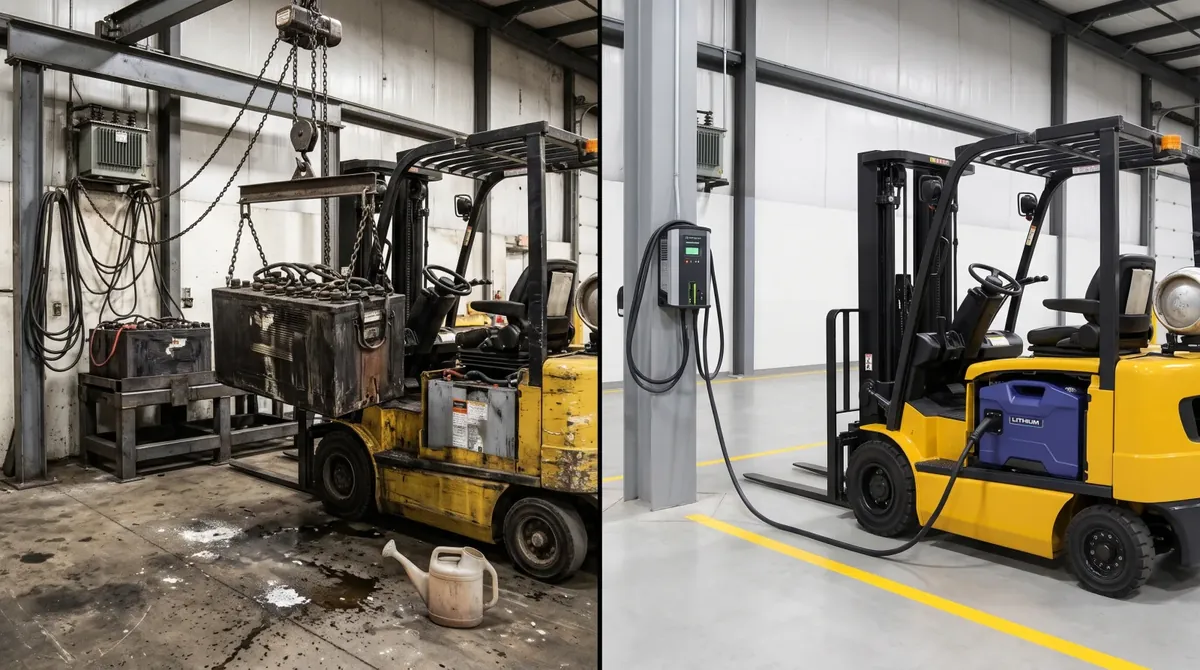
On a 24×7 schedule, each truck needed two flooded lead-acid batteries: one in the truck and one spare. Someone had to swap them between shifts, on every truck.
The manufacturer described the other problems that came with this setup: acid spills and corrosion, power fading late in the shift, and short battery life.
Flooded lead-acid batteries also lose water from the electrolyte in normal use and need regular refilling, with care to avoid spilling the sulfuric acid, as the Canadian Centre for Occupational Health and Safety explains. On a fleet that runs day and night, that is one more job to fit around the shifts.
Why the manufacturer chose lithium over new lead-acid
The manufacturer came to us through our sales team and gave four reasons for choosing us: packs custom-fitted to their trucks, the warranty, local service, and the fact that the packs are made in India. We build custom battery packs for OEMs at our plant in Rajkot, in the same state as the customer.
Its other option was a fresh set of lead-acid batteries. That would have kept the same routine: a spare for every truck, a swap between shifts, watering and the risk of acid spills. LFP removes two of those jobs by its chemistry: it needs no watering, and it needs no equalising charge, the periodic overcharge that flooded lead-acid batteries are given to balance their cells. With a full charge in about 3 hours on a matching charger, the pack can stay in the truck.
The 80V 400Ah pack
The pack is an 80V 400Ah LFP battery sized for a 3-tonne counterbalance forklift, the type that carries the load on forks ahead of the front wheels, balanced by the weight at the back. At 80V × 400Ah, it holds 32 kWh nominal.
| Item | Detail |
|---|---|
| Chemistry | LFP (lithium iron phosphate) |
| Nominal voltage | 80V |
| Capacity | 400Ah |
| Nominal energy | 32 kWh (80V × 400Ah) |
| Truck | 3-tonne counterbalance forklift |
| Mounting | Modified battery tray |
| Truck display | Shows the pack's state of charge |
| Charger | New lithium charger, supplied by Halovolt |
| Charger link | Charger communicates with the pack's battery management system (BMS) |
| Full charge | About 3 hours |
| Charging routine | Once a day |
| Warranty | 3 years |
You can read more about how we build and protect our packs and how a custom lithium battery pack is designed.
Rollout: a 2-truck pilot, then 38 more trucks
The rollout began with a pilot on 2 trucks. The pilot put the pack, the tray, the display reading and the new charger into daily work before the other 38 trucks moved over. Each truck was out of work for under an hour during the switch. Exact dates for the pilot and the full rollout are not given here.
Results after six months: no swaps, no spare batteries
After six months the 40 trucks had needed no battery swaps and no spare batteries.
| Counted item | With lead-acid | With LFP, after six months |
|---|---|---|
| Battery swaps | Between shifts | None |
| Spare batteries | 40 (one per truck) | None needed |
Beyond these two counts, the manufacturer reports steady power to the end of the shift, fewer breakdowns, no acid spills and labour hours saved. It did not give numbers for any of them.
There were some minor faults during the six months. Each was fixed. The manufacturer is now planning a further order.
What forklift makers and fleet owners can take from this
Count the spares when you compare costs. A three-shift lead-acid fleet like this one carries a second battery for every truck. Any comparison with new lead-acid should include the full set of batteries the fleet needs, spares included.
Plan the fit along with the pack. Settle the tray, the display reading and the charger link listed in the pack table before ordering for a whole fleet.
Start with a pilot. Two trucks went first. A small pilot lets a fleet test the fit and the charging routine while the other trucks keep working.
Agree on service before you order. Minor faults came up and were fixed. Local service and the warranty were two of the reasons the manufacturer chose this pack. Settle how faults will be reported and fixed before the trucks go into daily use.
Frequently asked questions
Can a lithium battery replace lead-acid in an existing forklift?
In this project it did: 40 trucks that ran on flooded lead-acid now run on 80V 400Ah LFP packs. Whether another truck can switch the same way depends on its voltage, its battery space and its electronics, so check those first.
Does a lithium forklift battery need a new charger?
In this project, yes. The trucks charge on new lithium chargers that we supplied, and the charger communicates with the pack's BMS while it charges.
What warranty comes with these forklift packs?
The packs in this project carry a 3-year warranty. Our support page is where you register the battery, and it links to the warranty policy.
How we gathered these facts
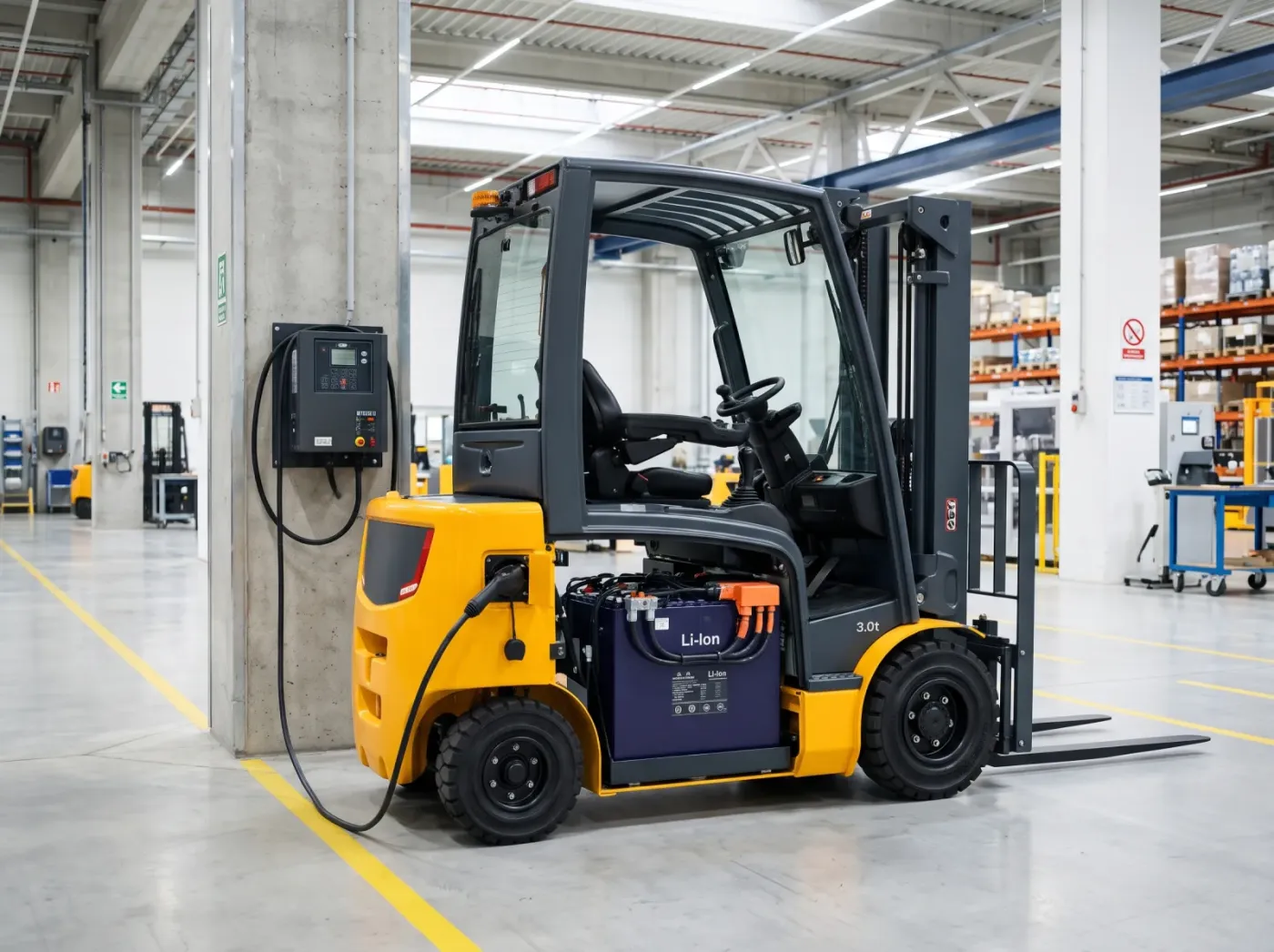
These facts come from our project and service records and from the manufacturer's feedback. We have not named the manufacturer or the truck brand. We do not have figures for energy use or cost. The manufacturer did not give figures for labour hours or breakdowns, so they are left out too. The cover image is an illustration, not a photo of this customer's trucks.
If you build forklifts or run a fleet and want a pack fitted to your trucks, send the details through our OEM quote form. You can also read our other case studies.
About the author
Aum Parsana is the founder of Halovolt and leads its technology and product work. Halovolt designs and builds LFP and NMC lithium battery packs in Rajkot, Gujarat. More about the company, our terms and policies and how to reach support.