The problem: a new plant on a weak grid
The plant needed backup power before it could count on steady production. It was a new manufacturing site with no backup of any kind, and grid outages in its area are frequent.
The owners had two options on the table: a diesel genset, or solar with battery storage. They came to us through a solar EPC partner (the engineering, procurement and construction contractor that builds the solar plant).
Why storage instead of a diesel genset
A genset covers outages by burning diesel, with engine noise and exhaust on site. A battery bank charged from solar stores the plant's own generation and gives it back when the grid drops. The same bank lets the plant use more of its solar on site instead of exporting it or losing it. The plant's six-month feedback matches those points.
The plant also told us why it picked our battery energy storage system over other suppliers: price, custom sizing, the 10-year warranty, local service, Indian manufacturing and remote monitoring. Local service here is literal. Our team is in Rajkot, the same city as the plant.
The system: two Vidyut 240 cabinets and 150 kWp of solar
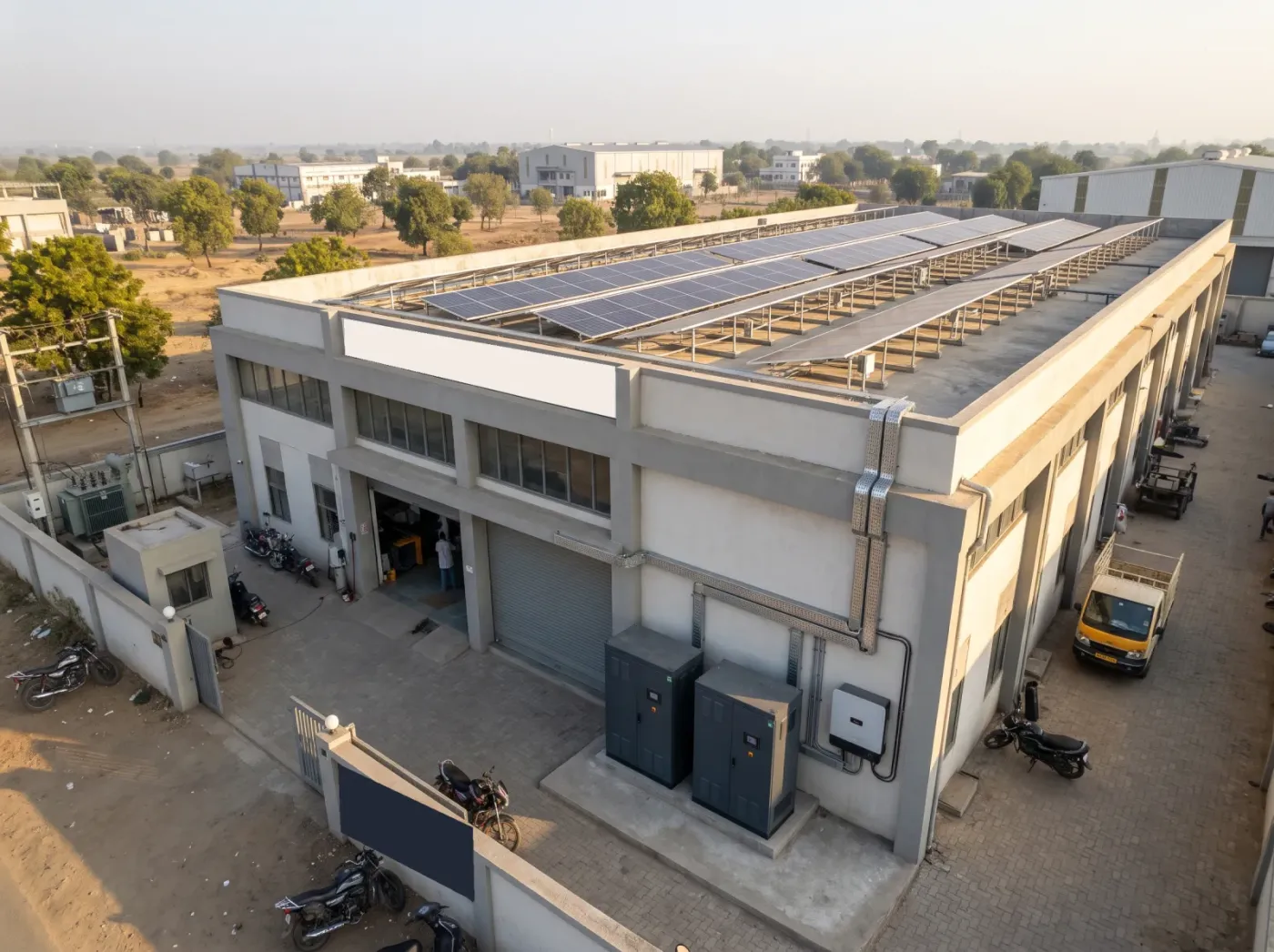
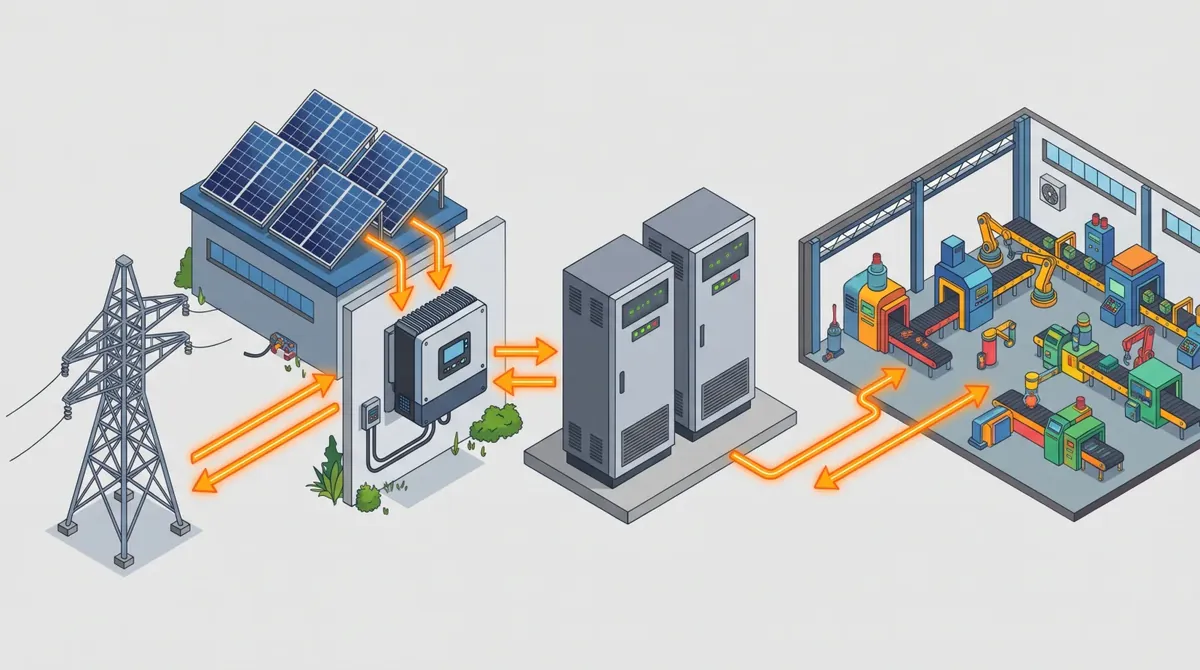
The storage is two Vidyut 240 cabinets, 48 kWh each, working with 150 kWp (kilowatt-peak, the solar array's rated output) of solar added in the same project. A hybrid inverter supplied by the plant's solar EPC ties the solar, the batteries and the factory load together. The inverter's make and rating are not part of this case study.
| Item | Detail |
|---|---|
| Battery | 2 × Vidyut 240 cabinets |
| Chemistry | LFP (lithium iron phosphate), prismatic (rectangular hard-case) cells |
| Each cabinet | 240V, 200Ah, 48 kWh |
| Total storage | 96 kWh |
| Cycle rating | 8,000 cycles at 80% depth of discharge |
| Warranty | 10 years |
| Interfaces and display | CAN, RS485, Bluetooth app, state-of-charge display |
| Monitoring | Remote monitoring portal, plus the BMS (battery management system) screen |
| Protection rating | IP67 under IEC 60529, the standard for dust and water protection |
| Operating temperature | −10 to 55 °C |
| Size and weight | 600 × 650 × 1100 mm, 440 kg per cabinet |
| Solar | 150 kWp, added in the same project |
| Inverter | Hybrid, supplied by the solar EPC |
| Load | Full factory, 50 kW peak |
What that capacity means in hours is a calculation from the ratings, not a measurement from the site. Two cabinets at 48 kWh give 96 kWh. At 80% depth of discharge (the share of capacity used in one cycle), about 76.8 kWh is usable. At the full 50 kW peak, that lasts roughly 1.5 hours on battery alone, and longer at lighter loads. The figure leaves out inverter losses and any solar input during an outage.
Installation and commissioning
Our team installed the battery system. The timings below come from our project records.
| Stage | Time taken |
|---|---|
| Order to delivery | Under two weeks |
| Installation and commissioning | 15 days |
| In operation so far | Six months |
The Vidyut 240 is made to order, with a catalogue build time of 6 to 7 days.
Six months in: what the plant reports
The plant reports no production stops during grid outages in its first six months on the system. It also reports more of its solar used on site, a lower electricity bill, and a quieter, cleaner site than a genset would have given. The plant gave no figures for these outcomes, so we give none.
There has been one minor fault since commissioning. It was fixed remotely.
Lessons for other factories planning storage
- Size from usable energy and peak load. Divide the usable energy by your peak load for a worst-case runtime, as in the calculation above, then compare it with how long your outages usually last.
- Plan solar and storage as one project. This plant added its solar and its batteries together, with the EPC supplying the hybrid inverter. One plan settles how much solar charges the bank and how much load the inverter has to carry.
- Ask for remote monitoring before you sign. The one fault on this system was fixed remotely. A remote monitoring portal lets your supplier check a problem without waiting for a site visit, and the BMS screen gives your own staff a live reading on site.
- Plan floor space for expansion. Up to four Vidyut 240 cabinets can run in parallel, and each needs floor space and floor strength for 440 kg. Leave room for extra cabinets if your load is likely to grow.
Frequently asked questions
How long can 96 kWh run a factory?
It depends on the load. For this plant the calculation above gives roughly 1.5 hours at its 50 kW peak, and longer whenever the load is below peak. Solar adds to that during daylight. We have no measured runtime for this plant to publish.
Can more cabinets be added later?
Yes, up to four Vidyut 240 cabinets can run in parallel. A two-cabinet system like this one could take two more, which by calculation gives 192 kWh. Check with your EPC that the inverter can handle the larger bank before you order.
What does the 8,000-cycle rating mean?
One cycle is one charge and one discharge. The 8,000-cycle rating applies when each cycle uses 80% of the battery's capacity. It is the rated figure for this version of the Vidyut 240, which is also sold in a 6,000-cycle version.
How we gathered these facts
This case study draws on our project and service records and on the plant's own feedback. The plant is anonymised, so we name only its industry and city. Figures the plant did not give are left out, and so are cost, savings, payback, exact project dates and how the 96 kWh size was chosen. There are no diesel figures because the plant never had a genset. The cover image is an illustration, not a photo of the plant.
Planning backup power for your factory? Send your load and outage details through the Vidyut 240 quote form, or read more case studies.
About the author
Aum Parsana is the founder of Halovolt and leads its technology and product work. Halovolt designs and builds LFP and NMC lithium battery packs in Rajkot, Gujarat. More about the company, our terms and policies and how to reach support.