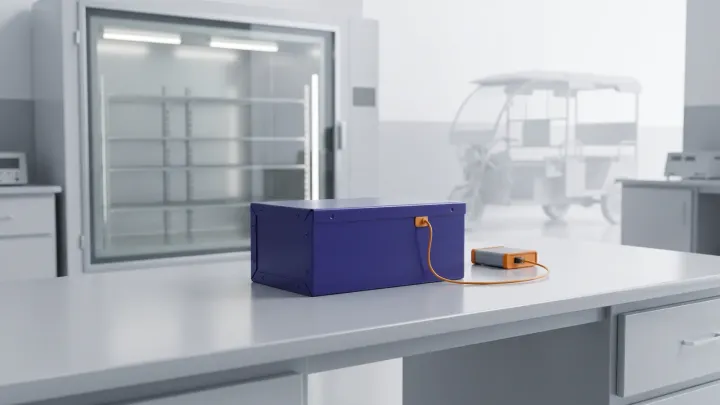
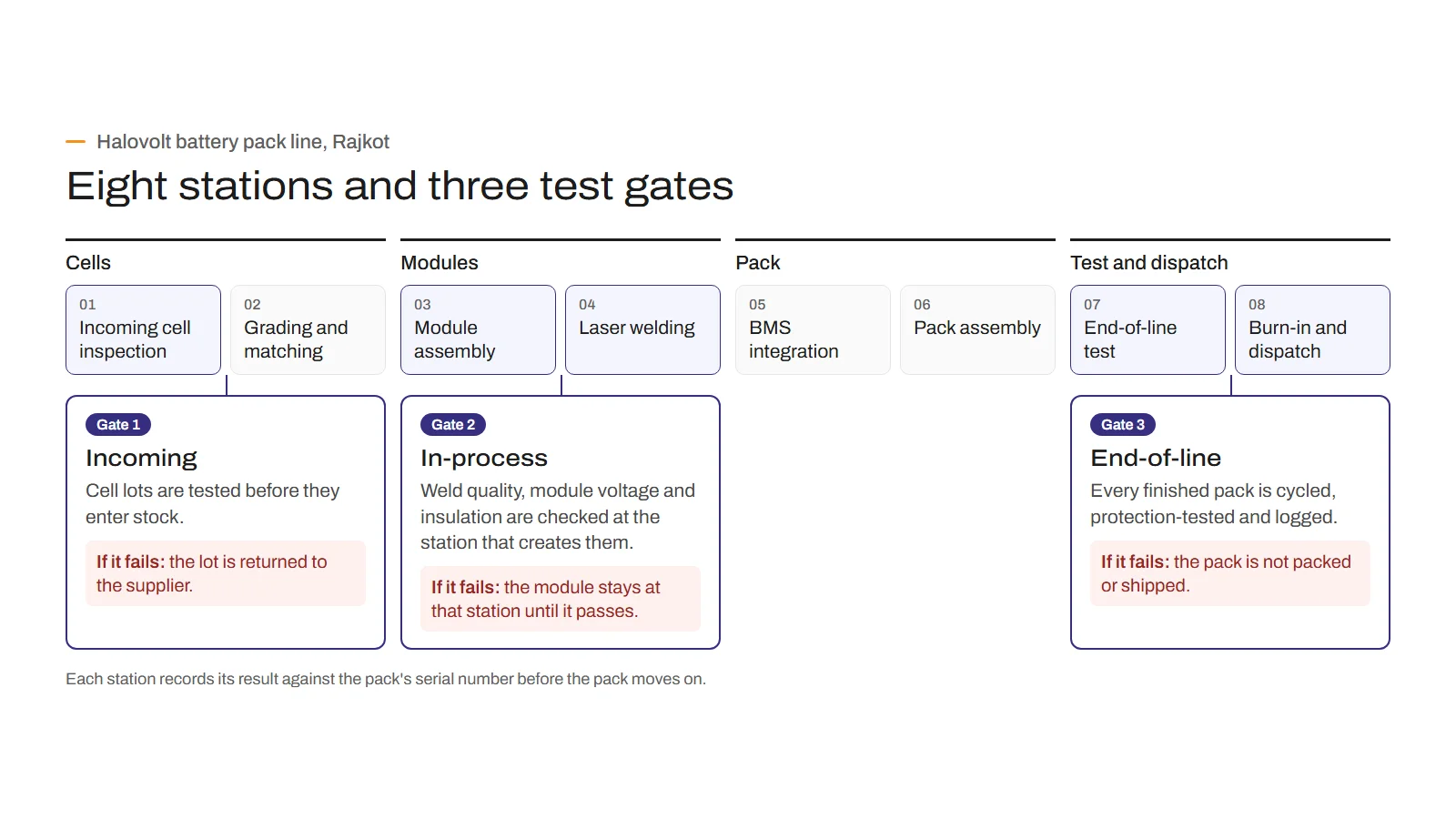
Lithium battery testing happens at two levels. Routine factory tests check every cell lot and every finished pack for voltage, internal resistance, capacity, insulation and protection trips. Type tests such as UN 38.3, IEC 62619 and AIS-156 are run on samples of a design to prove that design. At our Rajkot plant every pack passes three test gates (incoming, in-process and end-of-line) across eight stations.
Key Takeaways
- A routine test checks one cell lot or one pack. A type test checks a design, using samples, and a big enough change to that design means testing it again.
- At our plant, a failed cell lot goes back to the supplier, a failed module stays at its station until it passes, and a failed pack is not packed or shipped.
- UN 38.3 is a set of eight transport tests, T.1 to T.8. IEC 62133-2 (IS 16046 in India) covers portable batteries, IEC 62619 covers industrial and stationary ones, and AIS-156 covers electric L-category vehicles.
- Ask a supplier which tests run on every pack, for certificates that name your exact model, and when the design was last retested.
How we test every pack: eight stations and three gates
We make the packs described here, so read this half of the guide as a maker's account. It uses only facts we already publish on our manufacturing page, technology page and pack design guide, and we don't publish our test limits or durations.
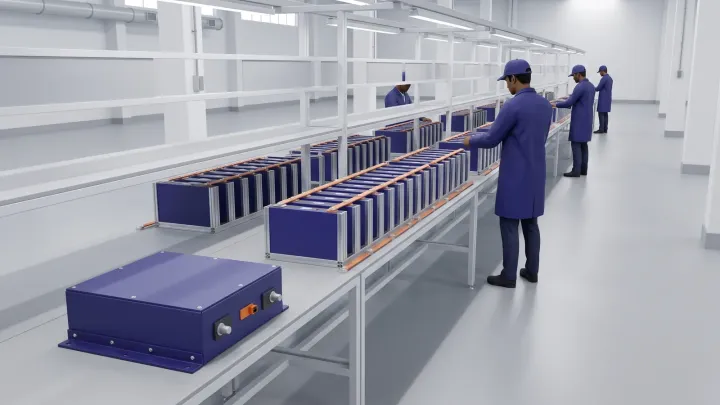
Every pack moves through eight stations. Each station records its result against the pack's serial number before the pack can move to the next one, and prototypes and volume orders go through the same stations and gates.
| Station | Stage | What happens |
|---|---|---|
| 01 Incoming cell inspection | Cells | Voltage, internal resistance and visual checks on a sample from every cell lot |
| 02 Grading and matching | Cells | Cells sorted by capacity and resistance into matched sets |
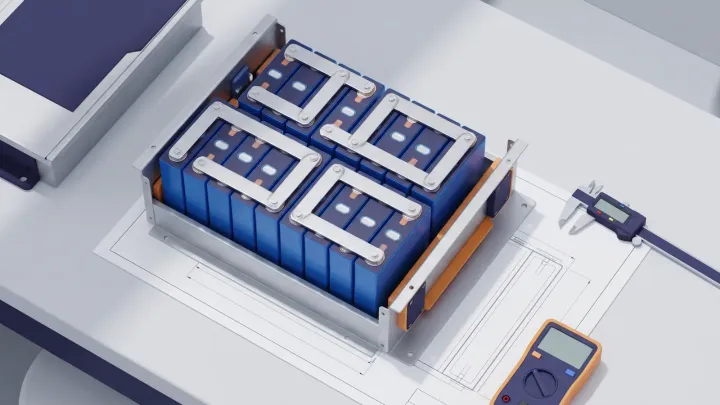
| 03 Module assembly | Modules | Fixture-based stacking with insulation, spacers and thermal pads |
| 04 Laser welding | Modules | Busbar welds with recorded power and depth, and pull-test sampling |
| 05 BMS integration | Pack | Harnessing, firmware flashing and calibration to the pack configuration |
| 06 Pack assembly | Pack | Enclosure fitting, sealing and torque-controlled fastening |
| 07 End-of-line test | Test and dispatch | Insulation, capacity, protection triggers and communication checks |
| 08 Burn-in and dispatch | Test and dispatch | Charge-discharge ageing, final state of charge set and UN 38.3 compliant packing |
Gate 1 covers incoming cells, gate 2 the checks made while modules are built, and gate 3 the finished pack.
Gate 1: incoming cell testing and grading
Cell testing starts before a cell model is first used. We source A-grade LFP and NMC cells, in prismatic, cylindrical and pouch formats, from tier-1 makers such as EVE, Highstar, Gotion and Highpower. A new cell model is approved only after its datasheet claims are checked against our own sample tests.
Each incoming lot is then checked for open-circuit voltage, internal resistance and sampled capacity, with visual checks on a sample, before it enters stock. We return a failed lot to the supplier.
We grade the lots that pass. Cell testers measure the capacity and internal resistance of every cell, and the cells are binned so each pack is built from a tightly matched set. Each cell lot is recorded against the packs built from it.
Capacity and resistance readings can only be compared when they are taken the same way. EVE's LF105 specification, for example, gives its impedance as measured at 1 kHz, and defines a standard charge and discharge at 0.5C and 25 ± 2 °C, between 3.65 V and 2.5 V per cell (EVE LF105 specification, December 2019). When a supplier quotes grading figures, ask how they were measured. What mismatched cells do to a finished pack is covered in our battery pack design guide.
Gate 2: in-process checks on welds, modules and insulation
Gate 2 checks weld quality, module voltage and insulation at the station that creates them. A module that fails stays at that station until it passes.
Every cell is laser-welded to its busbar, so there are no bolted connections to loosen under vibration. The fibre laser records weld power and depth, and pull tests are sampled from every welding run to check connection strength. Insulation testers check the isolation between the cells and the enclosure.
Later stations keep their own records: firmware and calibration at BMS integration, and fastening torque at pack assembly. We choose the battery management system (BMS) to suit each pack's cells, voltage and peak current, and set over-voltage, under-voltage, over-current, short-circuit and temperature limits for every cell group.
Gate 3: end-of-line testing and burn-in before dispatch
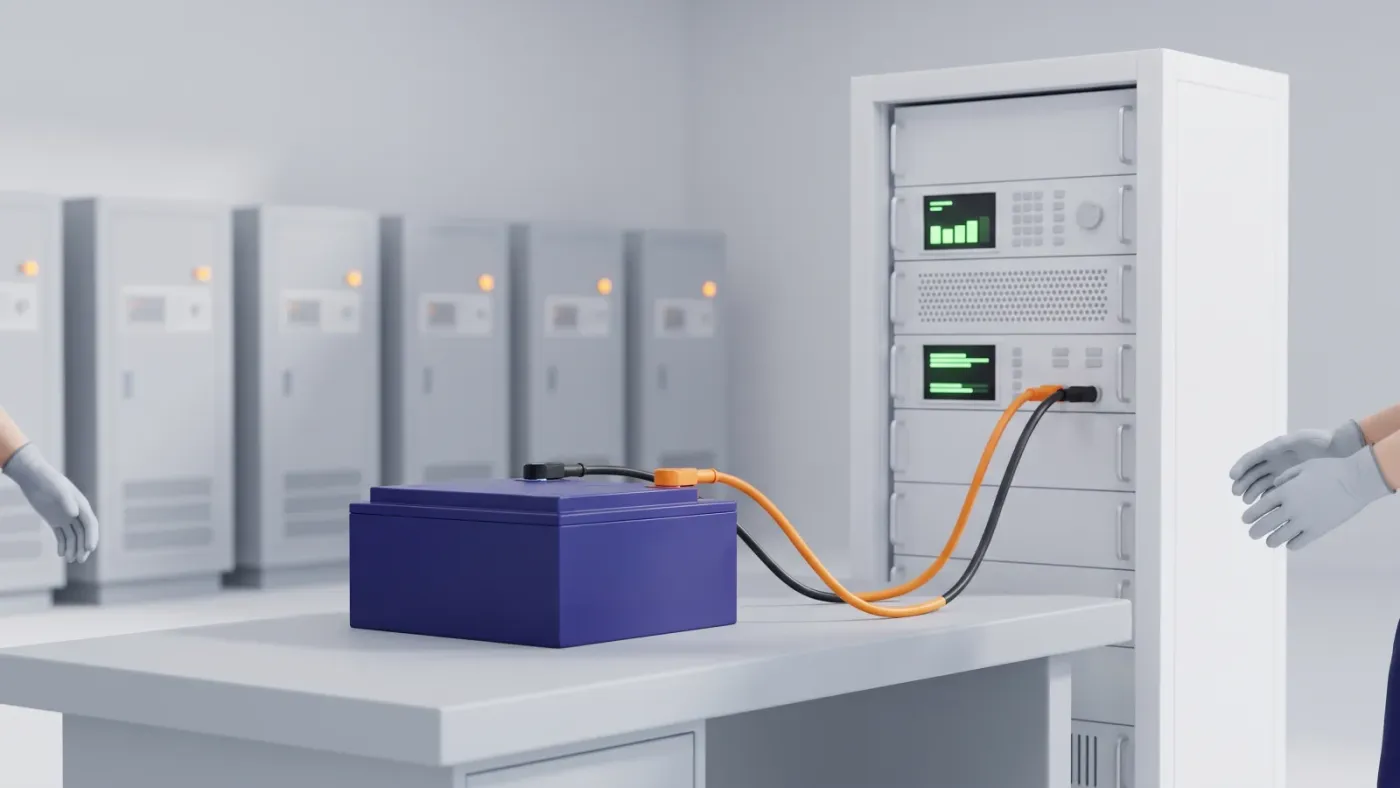
At the third gate every finished pack is cycled, protection-tested and logged. The end-of-line station checks insulation, capacity, protection triggers and communication. A protection trigger test checks that the BMS cuts the pack off when a limit is reached.
The pack then goes onto charge-discharge cyclers for burn-in, which measures its real capacity and ages it before dispatch. Its final state of charge is set, and it is packed for transport. For air freight, IATA requires lithium-ion batteries shipped on their own to be at no more than 30% of rated capacity (IATA fact sheet, December 2025).
A pack that fails this gate is not packed or shipped. Every pack that ships carries a build record of its cell lots, weld data and test results.
Battery pack validation: cycle, abuse, vibration, thermal shock and IP tests
The three gates check that each pack was built as designed. Validation checks the design itself. In-house, we test our designs for cycle life, abuse, vibration, thermal shock and IP rating, and validate them against thermal runaway propagation. Each safety level, from cell and module to pack and enclosure, is validated on its own, and our enclosures are rated IP54 to IP67. What cycle ratings mean, and the conditions behind them, is in our guide to how long a lithium battery lasts.
Certification is a separate step. Our quality system is certified to ISO 9001. The OEM packs we build hold IEC 62133, AIS-156 Phase II, UN 38.3 and BIS (IS 16046), and the Gati EV batteries in our shop are certified to AIS-156 Phase II. We also take OEM packs through IEC 62619 certification. We share certificates with buyers on request and don't publish them.
Lithium battery tests at cell, module and pack level
Whoever builds your battery, these measurements show whether a cell or pack matches its specification.
| Level | Test | What it shows |
|---|---|---|
| Cell | Open-circuit voltage | Cells in a lot that sit apart from the rest, and a rough state of charge (only rough on LFP, whose voltage curve is flat) |
| Cell | Internal resistance | Cells that will run hotter and deliver less power under load |
| Cell | Capacity | Amp-hours delivered under a stated charge and discharge method |
| Module | Weld checks | Strength of each cell-to-busbar connection |
| Module and pack | Insulation (isolation) resistance | Whether current can leak from live parts to the enclosure |
| Pack | Protection triggers | Whether the BMS cuts the pack off at its voltage, current and temperature limits |
| Pack | Communication | Whether the BMS reports to the inverter, charger or vehicle |
| Pack | Capacity and burn-in | Real energy at the terminals, and a pack exercised under load before it ships |
Standards turn some of these into pass marks. UN Regulation 136, the UN regulation for electric L-category vehicles, requires a high-voltage battery (above 60 V DC) to keep isolation resistance of at least 100 ohms per volt after its vibration and thermal shock tests (UN R136). We found no public isolation limit for packs of 60 V or less, which covers most inverter and e-rickshaw packs. AIS-156 requires the BMS to be verified for over-charge, over-discharge, over-temperature, overcurrent and short circuit protection (AIS-156 Amendment 3).
Lithium battery safety standards: UN 38.3, IEC 62133-2, IEC 62619, IS 16046 and AIS-156
Each standard covers one use, so a certificate only helps if it matches yours.
| Standard | Covers | Examples of what it tests |
|---|---|---|
| UN 38.3 | Transport of lithium cells and batteries | T.1 altitude simulation, T.2 thermal test, T.3 vibration, T.4 shock, T.5 external short circuit, T.6 impact or crush, T.7 overcharge, T.8 forced discharge |
| IEC 62133-2 | Portable sealed lithium cells and batteries, in intended use and reasonably foreseeable misuse | Continuous charging, case stress at high temperature, external short circuit, free fall, thermal abuse, crush, over-charging, forced discharge, forced internal short circuit |
| IS 16046 (Part 2):2018 | India's version of IEC 62133-2:2017, listed by BIS as identical | The same tests, for registration with BIS |
| IEC 62619:2022 | Industrial uses, including telecom, UPS, energy storage, forklifts and AGVs; road vehicles excluded | External short circuit, impact, drop, thermal abuse, overcharge, forced discharge, internal short circuit, a propagation test on the battery system, BMS overcharge and overheating control, EMC |
| AIS-156 (our AIS-156 guide) | Electric L-category vehicles in India: two-wheelers, three-wheelers and quadricycles | BMS protection checks, an IP X7 water test at 100% charge, a thermal propagation test, cells certified to IS 16893 Parts 2 and 3 |
The IEC test lists come from the contents pages of IEC 62133-2 and IEC 62619, and the AIS-156 items from Amendment 3.
UN 38.3 transport tests: T.1 to T.8
Battery packs and modules count as batteries under UN 38.3. A rechargeable battery goes through T.1 to T.5 and T.7, and its cell type through T.1 to T.6 and T.8. Tests T.1 to T.5 run in sequence on the same battery (UN Manual of Tests and Criteria, section 38.3, sixth revised edition).
IATA describes the first two: a pressure equal to an altitude of 50,000 ft for 6 hours, then storage at 72 °C and -40 °C, 6 hours each, repeated 10 times. IATA says all lithium cell and battery types "must pass up to 8 different tests", and that makers and distributors must make a test summary available (IATA). The tests don't measure cycle life or how a battery ages in a home or vehicle. We read the sixth revised edition of the UN text; newer editions have been published since, so ask the lab which edition it applied.
IS 16046 and BIS registration
BIS lists IS 16046 under its Compulsory Registration Scheme for sealed secondary cells and batteries for portable applications (BIS Scheme-II list, updated 26 October 2026). That row says "portable", so ask a lab whether it applies to an inverter, solar or traction pack.
Factory tests vs type tests at a battery testing lab
A type test proves a design on samples, and the result applies to units built to that design, as long as production matches the tested samples. Both IEC standards above have a type test clause with a table of sample sizes. Under AIS-156, a test agency verifies the pack rules "at the time of type approval and CoP" (conformity of production), and cells must be certified by an NABL-accredited lab or a notified test agency. Under BIS registration, products are tested at BIS-recognised labs, which must be accredited to ISO/IEC 17025 (BIS Laboratory Recognition Scheme, June 2020). In India, NABL, a board of the Quality Council of India, accredits testing labs to ISO/IEC 17025.
Routine tests tie each production pack to the samples that passed. IATA says a lithium battery maker must run a quality management system so that the batteries it makes "all meet the same specifications as those subjected to the design type tests".
| Routine factory tests | Type tests | |
|---|---|---|
| Run on | Every cell lot or every pack | Samples of one design |
| Run by | The maker, on its own line | Usually an accredited lab or a notified test agency |
| How often | Continuously, on every lot or pack | Once per design, and again after changes |
| Shows | This pack matches its specification | The design meets the standard |
| Evidence to ask for | The test record for your serial number | Certificate, test report or UN 38.3 test summary |
A change can make a design a new type. UN 38.3 treats a rechargeable battery as a new type if its energy changes by more than 20% or its voltage rises by more than 20%, and lists a change of protective devices (hardware and software), of cell count or of how cells are connected as changes that may need retesting (UN 38.3).
Questions to ask a battery supplier about testing
Ask every maker on your shortlist the same questions, including us.
- Which tests run on every pack, and which only on samples? Ask to see the end-of-line record for one serial number.
- How are incoming cells checked? Ask who made the cells, what is measured on each lot, and whether every cell is graded or only a sample.
- How are welds checked? Ask whether weld settings are recorded and how often connection strength is tested.
- Is insulation tested on every finished pack?
- Which protection limits are tripped at end of line? Compare the answer with the BMS limits on the datasheet.
- Is every pack cycled before dispatch? Ask what the burn-in covers.
- Which certificate names your exact model? It should give the standard and its edition, the model, and the lab or agency. For shipping, ask for the UN 38.3 test summary.
- What has changed since the design was tested? Ask about cells, BMS, cell count and layout, and when it was last retested.
- Can your pack be traced to its cell lots?
- Can you see the line and the test lab?
For a wider shortlist, our list of lithium battery manufacturers in India separates cell makers from pack makers.
Book a factory visit or start an OEM project
You can see the production line and the test lab on a factory tour. Tours take about two hours, Monday to Saturday, and you can request a date on our manufacturing page. If you need a pack designed, built and tested for your product, send us your brief through the OEM quote form.
Sources
- Halovolt, Manufacturing page (eight stations and three test gates), read 16 November 2026
- Halovolt, Technology page (cell sourcing, test equipment and safety levels), read 16 November 2026
- UN Manual of Tests and Criteria, sixth revised edition, sub-section 38.3 (unofficial version with the February 2016 corrections, copy hosted by HEL Group), read 16 November 2026
- IATA, Lithium batteries fact sheet, December 2025
- IEC Webstore, IEC 62133-2:2017, published 7 February 2017, with Amendment 1 (2021)
- IEC 62133-2 edition 1.1 (2021), preview with contents pages (VDE Verlag)
- IEC Webstore, IEC 62619:2022, edition 2.0, published 24 May 2022
- IEC 62619 edition 2.0 (2022) commented version, preview with contents pages (VDE Verlag)
- BIS, listing for IS 16046 (Part 2):2018, read 16 November 2026
- BIS, Scheme-II (Compulsory Registration Scheme) product list, updated 26 October 2026
- BIS, Laboratory Recognition Scheme 2020, June 2020
- NABL, National Accreditation Board for Testing and Calibration Laboratories, home page, read 16 November 2026
- MoRTH and ARAI, Amendment 3 to AIS-156, September 2022 (hosted by ACMA)
- UN Regulation No. 136, copy on Japan's MLIT site, read 16 November 2026
- EVE Energy, LF105 product specification, version F, effective 2 December 2019 (copy hosted by Battery Junction)
Frequently asked questions
What does a battery testing lab do?
A battery testing lab runs standard tests, such as overcharge, short circuit, crush and vibration, on sample cells or packs and reports whether they pass. For Indian certificates the lab's accreditation matters: BIS registration uses BIS-recognised labs accredited to ISO/IEC 17025, and AIS-156 asks for cells certified by an NABL-accredited lab or a notified test agency. A maker's in-house lab runs production and development tests.
Is UN 38.3 the same as a battery safety certificate?
No. UN 38.3 is a set of up to eight transport tests, T.1 to T.8, that a cell or battery type must pass before it is shipped, covering conditions such as low pressure, temperature swings, vibration and shock. For safety in use, look for IEC 62133-2 on portable batteries, IEC 62619 on industrial and stationary ones, or AIS-156 on electric two- and three-wheelers in India.
Does every lithium battery pack get tested before it ships?
That depends on the maker. Type tests are run on samples of a design, so a certificate alone does not show that your pack was tested. Ask whether every finished pack gets an end-of-line test and burn-in, and for the record for your serial number. On our line, every pack passes three test gates.
What is battery burn-in?
Burn-in is a charge and discharge run on a finished pack before it leaves the factory. It measures the pack's real capacity and works the cells, welds and BMS together under load. On our line it is the last station before the pack is packed for transport.
Why does internal resistance matter when testing lithium cells?
A cell with higher internal resistance turns more of its current into heat and holds a lower voltage under load. In parallel, a lower-resistance cell carries more of the current than its neighbour. Makers measure resistance on incoming cells and use it, with capacity, to sort cells into matched sets.